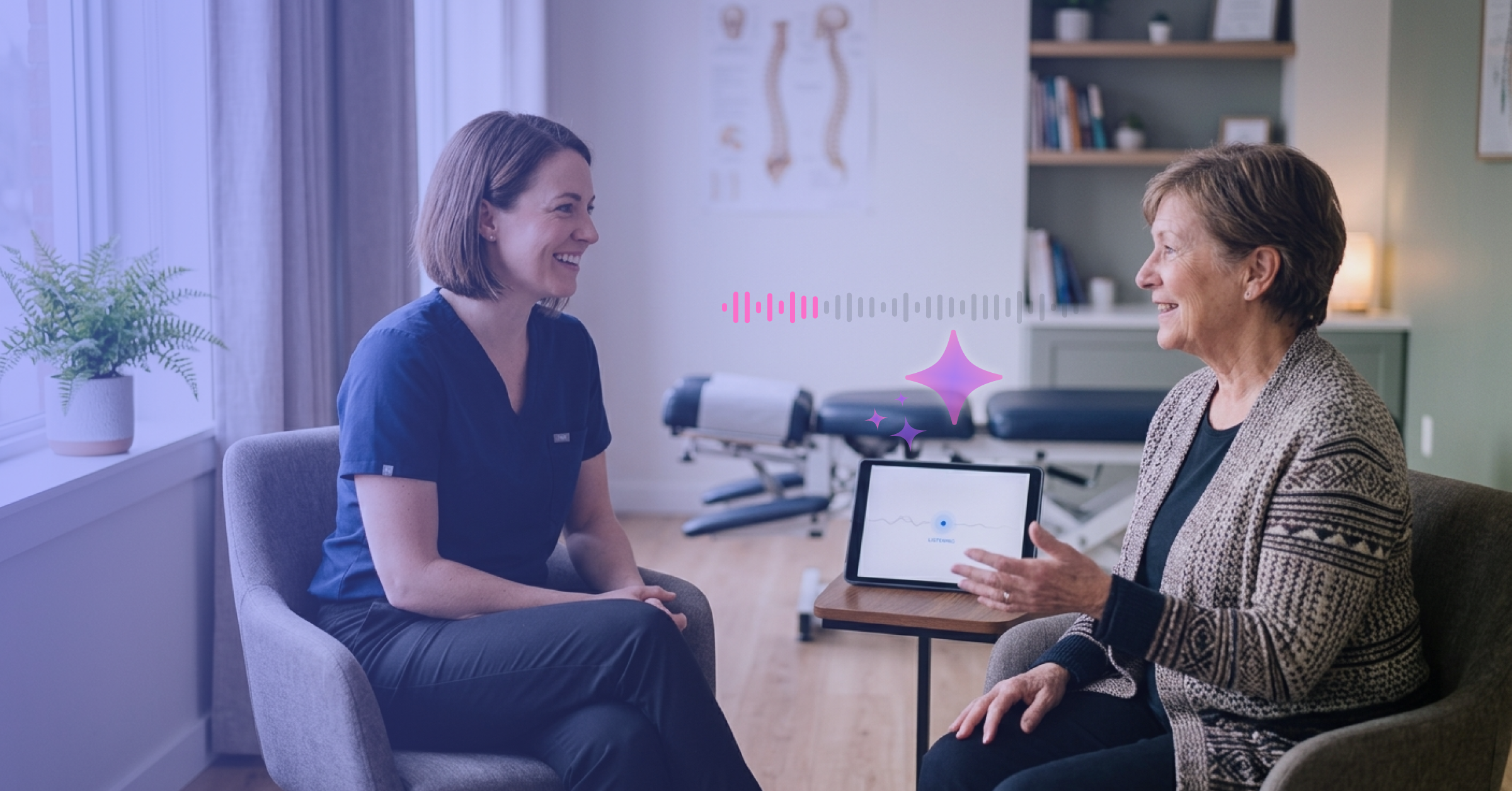
AI Clinical Notes Explained
What actually happens when AI creates a clinical note?
From capturing information during an appointment to creating a structured draft for the practitioner to review, understanding how the process works can help you decide whether AI note taking is right for your clinic.
AI clinical notes are designed to support practitioners by taking care of some of the repetitive work involved in documentation. The goal is not to replace clinical judgement, but to reduce administrative tasks and give practitioners more time to focus on patient care.
In this article, we’ll look at how AI clinical notes work, what practitioners should check before approving a note, some of the limitations to consider, and how to test AI in your clinic.
What Is an AI-Drafted Clinical Note?
An AI-drafted clinical note uses artificial intelligence to turn information from a patient consultation into a draft.
Instead of starting from scratch after the appointment, the practitioner can review the information, make any necessary changes and finalise the note.
AI may use information such as:
✓ Conversations between the practitioner and patient
✓ Clinical observations discussed during the appointment
✓ Relevant symptoms and history
✓ Assessments and findings
✓ Treatment plans and agreed next steps
The practitioner remains responsible for deciding what should be included in the final record and ensuring it accurately reflects the consultation.
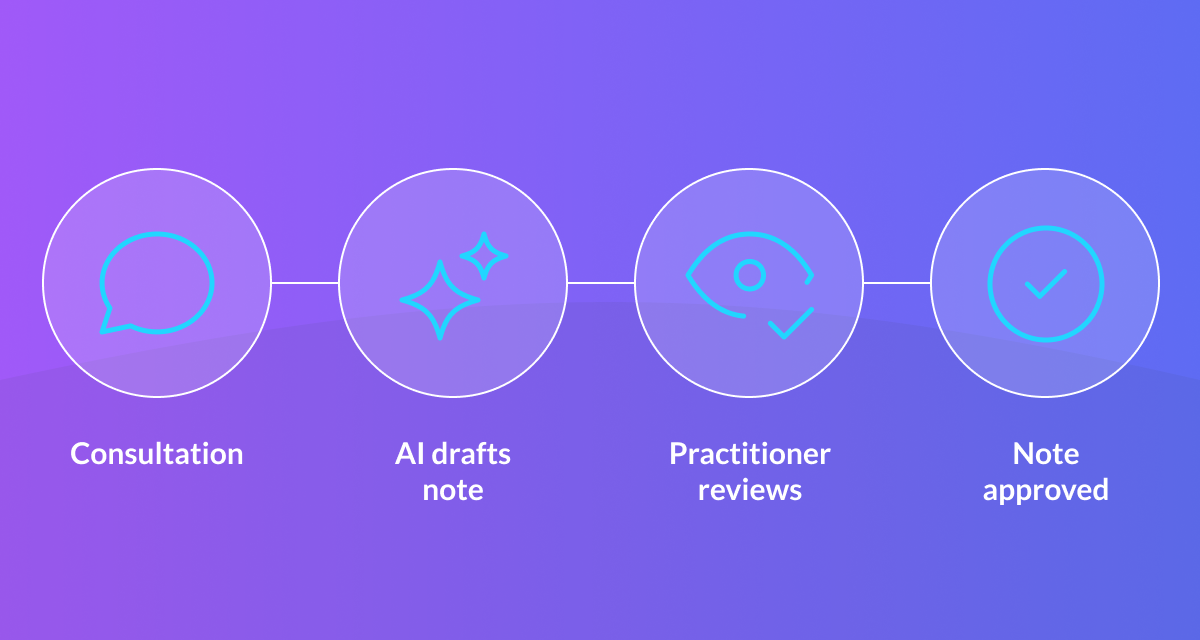
How Does the AI Clinical Notes Workflow Work?
While each platform works slightly differently, the general process follows four simple steps:
1. The consultation takes place
The practitioner conducts the appointment as usual, focusing on the patient rather than typing notes throughout the conversation.
2. AI creates a draft note
The AI analyses the captured information and generates a structured draft based on the consultation.
3. The practitioner reviews the draft
The practitioner checks that the information is accurate, relevant, and complete before making any necessary changes.
4. The note is approved
Once reviewed, the final note can become part of the patient record.
It is important to remember that, while AI can help streamline documentation, it can also make mistakes. The practitioner must always take full responsibility for reviewing and approving the final clinical note.
What Should Practitioners Check Before Approving an AI Note?
Even when an AI-generated draft looks complete, it’s important to review the details carefully.
A practical review checklist could include:
✓ Patient details and appointment information – confirm the note relates to the correct patient and consultation.
✓ Clinical accuracy – check terminology, measurements, findings, and relevant history are correct.
✓ Assessment and treatment plan – ensure the summary reflects the consultation and agreed next steps.
✓ Completeness – add any missing information and remove anything inaccurate or unnecessary.
A brief review helps ensure the final note reflects the practitioner’s clinical judgement and the care actually provided.
What Are the Limitations of AI Clinical Notes?
Like any technology, AI-generated notes can sometimes miss information, misunderstand context, or include details that require correction.
Common limitations may include:
- Missing context that could require clinical interpretation
- Misinterpreting terminology or abbreviations
- Including unnecessary information
- Requiring adjustments for complex or unusual cases
There may also be situations where manual documentation remains the better option, particularly when:
- A consultation involves highly sensitive information
- The practitioner prefers a specific documentation style
- The appointment requires detailed manual recording
- The clinical situation is complex and requires additional interpretation
The best approach is finding where AI can support your workflow while maintaining appropriate clinical oversight.
How to Test AI Clinical Notes in Your Clinic
Introducing AI does not need to mean changing everything at once. In fact a practical approach is to start with one practitioner, one workflow, or a specific appointment type.
During a trial period, consider measuring:
Time saved
How long does documentation take before and after using AI notes?
Amount of editing required
How much adjustment does each draft need before approval?
Practitioner experience
Does the practitioner find the workflow easier and less disruptive?
Documentation quality
Are notes complete, consistent, and aligned with your usual standards?
Starting small allows your team to understand where AI adds the most value, which areas may require additional review, and whether it fits naturally into your existing workflow before expanding its use.
See How Nookal AI Can Support Your Clinic
AI can be a useful addition to your clinic’s workflow when it is introduced thoughtfully and used to support the work your team is already doing.
Nookal is practice management software that brings AI into your workflow to help reduce repetitive administrative tasks, giving practitioners more time to focus on patients while keeping them in control of how AI is used.
Clinical notes are one example of where AI can help. By starting with a specific workflow and seeing how it fits into your day-to-day processes, you can assess where AI could make a meaningful difference in your clinic.
Want to see what AI could do for your clinic? Start your FREE Nookal trial today.


Leave a Comment